How to Make Your Hotel a Smart Hotel in 5 Easy Steps by Hotel management system in india
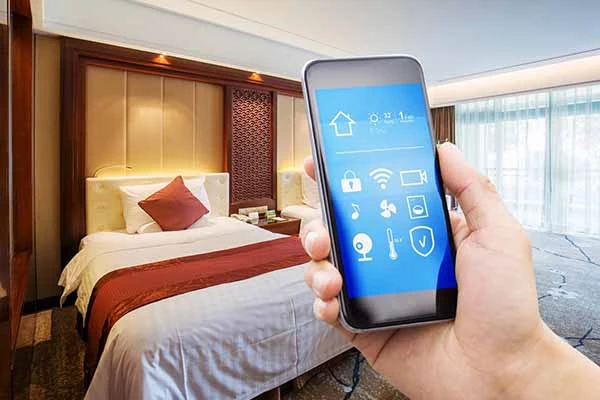
One of the newest developments in this area is smart hotel technology which is called the best Hotel management system in India. Hotel owners and other industry executives are continually looking for innovative methods to cut costs and enhance the guest experience. Learn more about smart hotels in this post, including what they are, why they are advantageous for both motel owners and guests, and how to upgrade your ordinary motel rooms to modern smart rooms.
What is a Smart Hotel and Hotel management system in India?
A smart hotel is a hotel management system in India that prioritizes the usage of linked technological devices, to put it simply. The idea of the “Internet of Things,” or IoT for short, which involves giving common things internet connectivity and the capacity to transmit and receive data, is what is essentially driving this.
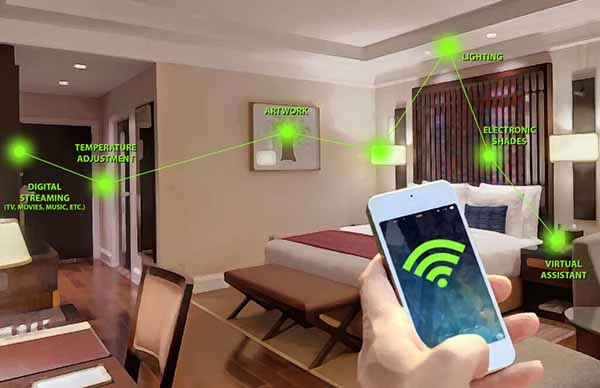
When devices can communicate with one another in this way, they are frequently manageable from a single location, such as a remote control or mobile app. Additionally, internet connectivity can enable a higher level of personalization, automation, and ease, and the devices can access current data to assist customers.
Should All Hotels Upgrade to Smart Hotels by the hotel management system in India?
A growing number of hotel chains, including Hilton and Marriott, have started to use smart hotel technology and roll out smart room products during the past few years. Many more will follow them in the coming years, which might put the remainder of the hotel sector at a competitive disadvantage if they don’t follow suit.
Having said that, hotel owners should support the proposal for more reasons than just keeping up with the competition. In reality, as you will discover in the following part, smart hotel technology has the potential to enhance not only the visitor experience but also the bottom line for hotel owners.
How to Transform Your Hotel Into a Smart Hotel
-
Enhancing your room using automated controls
IoT technology can be used to provide more automated room controls in order to build a smart hotel idea. This entails giving equipment the ability to adapt intelligently to changes in conditions and allowing different components of a room, such as heating, lighting, and air conditioning, to be managed from a single control point.
So, for instance, it might imply that heating is turned on automatically when the room’s temperature falls below a given level and is turned off automatically when it rises over a certain level. The power of bulbs can be programmed to adjust automatically based on the amount of daylight. It’s also possible that customers may be able to register their own preferences for the room via an app, such their ideal temperature, and the room will then keep that temperature consistently.
-
Utilize voice recognition.
Hotels can now adopt voice recognition technology with greater ease thanks to smart speakers and products like Alexa for Hospitality. This technology can be used in rooms in a variety of fun ways. Importantly, this type of technology enhances the customer experience by making certain tasks quicker and simpler to complete.
For instance, voice-activated smart speakers can give clients with the most recent news, information, or answers to questions and requests for tourist information. Similar to how users can control TV stations, play music, and switch off lights with simple voice commands thanks to smart hubs.
-
Integrate smart hubs with reservation systems
By integrating smart hubs with the hotel’s reservation systems, hotel management can also attempt to shift into smart hotel room offerings. In essence, this will make sure that visitors can easily and swiftly book hotel amenities from the comfort of their accommodation and have access to real-time information.
This might mean letting visitors reserve a table at the hotel restaurant using a smartphone app or even a tablet the hotel provides. It might also mean using voice commands with smart speakers to book tickets for an event, enroll in a fitness class at the hotel, or request room service.
-
Encourage More Personalization
Greater personalization is frequently mentioned as a key benefit of smart hotel systems, so it is crucial to emphasize this feature. A smart room should ultimately offer each visitor a variety of alternatives that help to personalize, individualize, and adjust their experience to their tastes.
For instance, it would be able to let visitors choose certain preferences on the app ahead of time so that the various gadgets can accommodate those preferences once they arrive. Hotels can also take measures to enable customers to access their personal Netflix, Spotify, Amazon, Google, and Facebook accounts from within the room.
-
Remotely Monitor Device Performance
The capacity to track the functioning of smart devices and act sooner when they exhibit signs of degradation, wear and tear, or failure is another significant advantage of developing a smart hotel. This saves money on more expensive repairs and prevents as many rooms from being unusable for protracted periods of time.
Therefore, utilizing this opportunity to remotely monitor the performance of basic devices is one of the finest methods to turn your motel into a smart motel. The most technologically advanced motels have implemented methods to notify personnel when particular gadgets start to have performance issues, enabling greater on-demand maintenance.